GEO Strategies for DeepSeek and Grok: Beyond ChatGPT
MencionAI Blog Vinícius Guimarães de Oliveira
MencionAI Blog Jun 04, 2026 · 3 min read / GEO
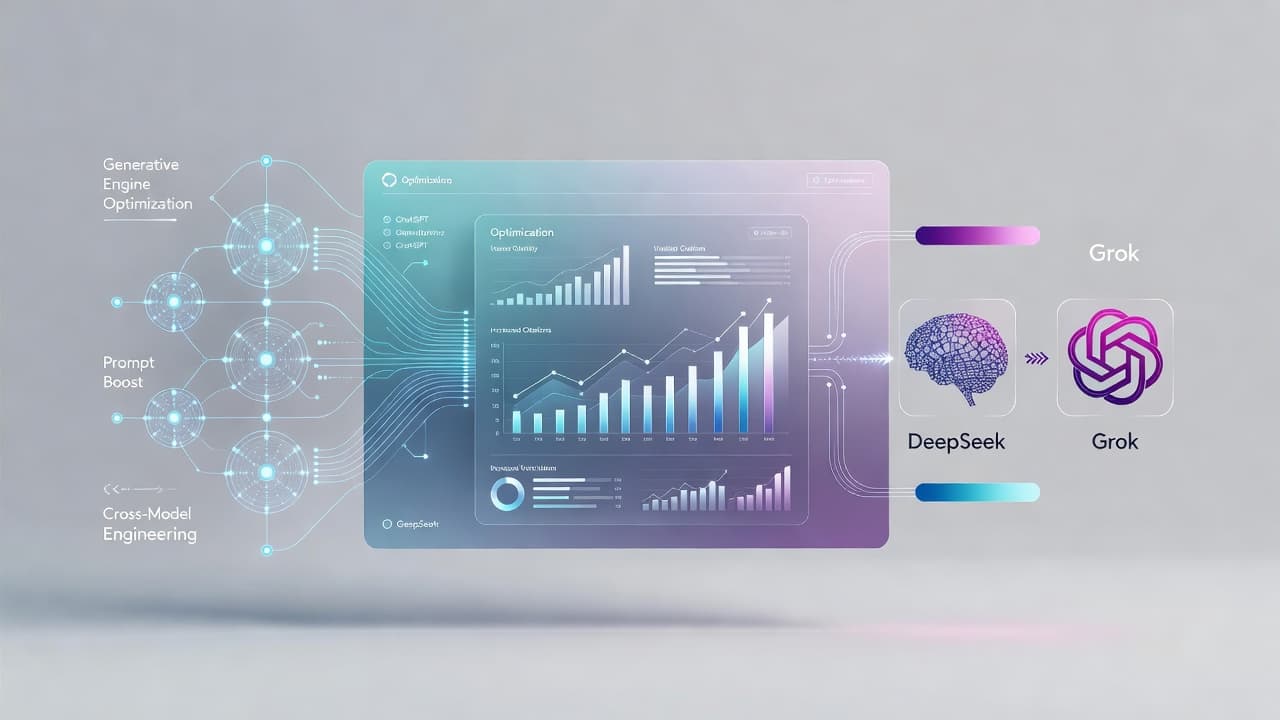
As AI assistants diversify, marketers need to expand their Generative Engine Optimization (GEO) tactics beyond ChatGPT and reach platforms like DeepSeek and Grok.
Quick answer
Google Search Central describes E-E-A-T as experience, expertise, authoritativeness, and trustworthiness — trust first. Named authors, first-hand experience, and citations to official docs help people judge who stands behind the page.
Summary
- DeepSeek stands out for its focus on technical reasoning and answers based on open data, prioritizing academic and technical sources.
- To be cited by DeepSeek, prioritize technical content with comparison tables, source code, and references to papers.
- Grok responds well to current, opinionated content with a relaxed tone.
- Track citations in real time using tools like MencionAI to monitor mentions in DeepSeek, Grok, and other LLMs.
- Create evergreen content optimized for traditional SEO while also producing updated versions for AI.
- Don’t simply replicate the exact same ChatGPT strategy.
Understanding the differences between DeepSeek and Grok
DeepSeek stands out for its focus on technical reasoning and answers based on open data, prioritizing academic and technical sources. Grok, developed by xAI, values timeliness, humor, and integration with real-time data from X (formerly Twitter). These differences require specific GEO approaches to increase the likelihood of citation.
Content optimization for DeepSeek
To be cited by DeepSeek, prioritize technical content with comparison tables, source code, and references to papers. Use clear headings, numbered lists, and structured data. Include terms such as "comparative analysis" and "benchmark" to align with the tool’s reasoning model.
Specific strategies for Grok
Grok responds well to current, opinionated content with a relaxed tone. Publish posts with insights on recent trends, use natural language, and include references to events on X. Create threads or articles that answer controversial questions directly and with fresh data.
Monitoring visibility across multiple models
Track citations in real time using tools like MencionAI to monitor mentions in DeepSeek, Grok, and other LLMs. Set up competitor alerts and analyze which types of content generate the most visibility on each platform.
Advanced cross-citation tactics
Create evergreen content optimized for traditional SEO while also producing updated versions for AI. Include structured FAQs, comparison tables, and primary sources. Test prompt variations to identify citation patterns in each model.
Common mistakes to avoid
Don’t simply replicate the exact same ChatGPT strategy. Avoid generic or outdated content. Focus on specific niches where DeepSeek and Grok are less saturated.
Conclusion and next steps
Expanding GEO to DeepSeek and Grok increases your brand’s reach in an increasingly fragmented AI ecosystem. Start by auditing your current content and implementing the tactics outlined here to boost citations and visibility.
How to apply this in 30 days (Brazil-first)
Brazilian buyers mix PT-BR and English prompts. Treat Brazil as the primary market even when you also ship English pages.
- Baseline 10 buyer-intent prompts in Portuguese and English across ChatGPT, Gemini, Claude, Perplexity, Grok, and DeepSeek.
- Ship one comparison page and one FAQ hub with stable heading IDs, using buyer language such as “melhor X para PME no Brasil”.
- Publish /llms.txt and allow documented AI crawlers only — do not invent tokens for Grok or DeepSeek.
- Re-scan weekly and map citation gaps to the next content change.
MencionAI tracks those models for marketing and growth teams in Brazil so you can see which answers cite you after each ship.
FAQ
What is E-E-A-T and how does it help AI citations?
Google Search Central describes E-E-A-T as experience, expertise, authoritativeness, and trustworthiness — trust first. Named authors, first-hand experience, and citations to official docs help people judge who stands behind the page. Structured data is not required for AI Overviews, but Article, Person, and Organization markup still help Search understand the author and publisher.