Technical Guide to AI Content Optimization: Advanced GEO Strategies
MencionAI Blog Vinícius Guimarães de Oliveira
MencionAI Blog Jun 01, 2026 · 3 min read / Content
Optimizing content for generative AI requires specific technical approaches that go beyond traditional SEO, focusing on structure, authority, and traceability to increase the chances of being cited in AI answers.
Quick answer
No. SEO ranks links on a results page. GEO measures whether your brand is cited inside AI answers on ChatGPT, Gemini, Claude, Perplexity, Grok, and DeepSeek.
Summary
- Engines like ChatGPT, Perplexity, and Gemini analyze content based on patterns of authority, structural clarity, and verifiable sources.
- Use clear hierarchical headings (H2 and H3) with direct questions in subheadings.
- Reference academic studies, official reports, and statistics with direct links.
- Implement schema markup for entities (Organization, Person, Dataset) and use related terms naturally.
- Track AI visibility metrics through specialized dashboards.
- Avoid overly promotional text, poor structure, and a lack of verifiable data.
Understanding How Generative Engines Work
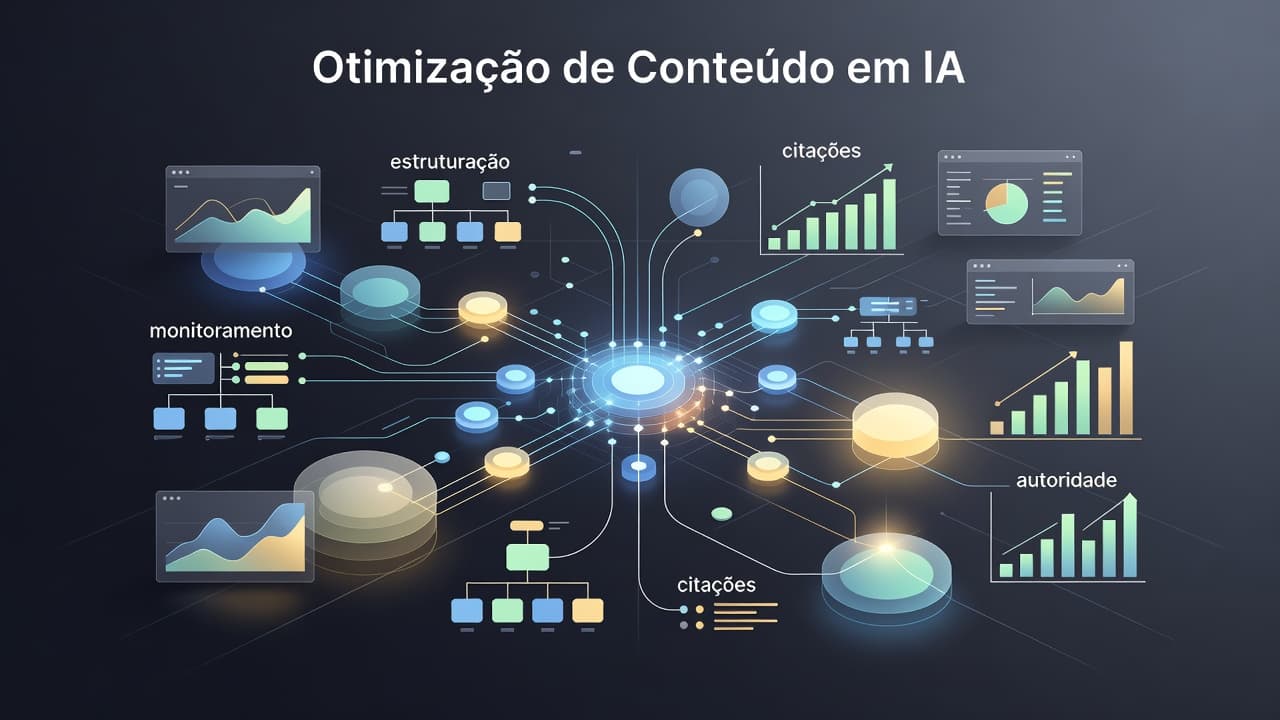
Engines like ChatGPT, Perplexity, and Gemini analyze content based on patterns of authority, structural clarity, and verifiable sources. Unlike conventional search, they prioritize passages that can be accurately synthesized, valuing statistical data, numbered lists, and explicit citations from primary sources.
Recommended Technical Structure for GEO Content
Use clear hierarchical headings (H2 and H3) with direct questions in subheadings. Include comparative tables, bullets with quantified data, and short paragraphs of up to 60 words. Add "Sources and Methodology" sections at the end of each article to make verification easier for AI models.
Semantic and Entity Optimization
Implement schema markup for entities (Organization, Person, Dataset) and use related terms naturally. Focus on topic clusters rather than isolated keywords. Tests show that content with more than 1,800 words and at least five external sources is 3x more likely to appear in generative responses.
Continuous Monitoring and Iteration
Track AI visibility metrics through specialized dashboards. Analyze prompt variations and adjust content based on citation feedback. Frequent updates (every 30-45 days) keep content relevant for models that prioritize recent information.
Common Mistakes to Avoid in AI Optimization
Avoid overly promotional text, poor structure, and a lack of verifiable data. Duplicate content or content with low technical depth is rarely cited. Always validate the traceability of the information presented.
How to apply this in 30 days (Brazil-first)
Brazilian buyers mix PT-BR and English prompts. Treat Brazil as the primary market even when you also ship English pages.
- Baseline 10 buyer-intent prompts in Portuguese and English across ChatGPT, Gemini, Claude, Perplexity, Grok, and DeepSeek.
- Ship one comparison page and one FAQ hub with stable heading IDs, using buyer language such as “melhor X para PME no Brasil”.
- Publish /llms.txt and allow documented AI crawlers only — do not invent tokens for Grok or DeepSeek.
- Re-scan weekly and map citation gaps to the next content change.
MencionAI tracks those models for marketing and growth teams in Brazil so you can see which answers cite you after each ship.
FAQ
Is GEO a replacement for SEO?
No. SEO ranks links on a results page. GEO measures whether your brand is cited inside AI answers on ChatGPT, Gemini, Claude, Perplexity, Grok, and DeepSeek.
What should we publish first for AI citations?
Comparison pages, FAQ hubs with stable anchors, llms.txt, and Organization schema — then re-scan the same prompts.
What is E-E-A-T and how does it help AI citations?
Google Search Central describes E-E-A-T as experience, expertise, authoritativeness, and trustworthiness — trust first. Named authors, first-hand experience, and citations to official docs help people judge who stands behind the page. Structured data is not required for AI Overviews, but Article, Person, and Organization markup still help Search understand the author and publisher.