
The Impact of AI on the B2B vs B2C Buying Journey and the Role of GEO
MencionAI Blog Vinícius Guimarães de Oliveira
MencionAI Blog Jun 08, 2026 · 3 min read / Market
Artificial intelligence is redefining how B2B and B2C buyers make decisions, changing touchpoints and information sources throughout the entire funnel.
Quick answer
Google Search Central describes E-E-A-T as experience, expertise, authoritativeness, and trustworthiness — trust first. Named authors, first-hand experience, and citations to official docs help people judge who stands behind the page.
Summary
- Tools like ChatGPT, Gemini, and Perplexity already account for a growing share of initial searches.
- In B2C, the journey is shorter, more emotional, and influenced by reviews, social media, and instant recommendations.
- Generative Engine Optimization (GEO) focuses on optimizing content to be cited by generative models.
- B2C companies should invest in conversational content, structured FAQs, and authentic reviews that AI can easily extract.
- Tracking how often your brand is cited by AI assistants, which competitors appear, and which topics reference you has become essential.
- AI does not replace the buying journey, but it reorganizes it.
How AI Is Transforming the Buying Journey
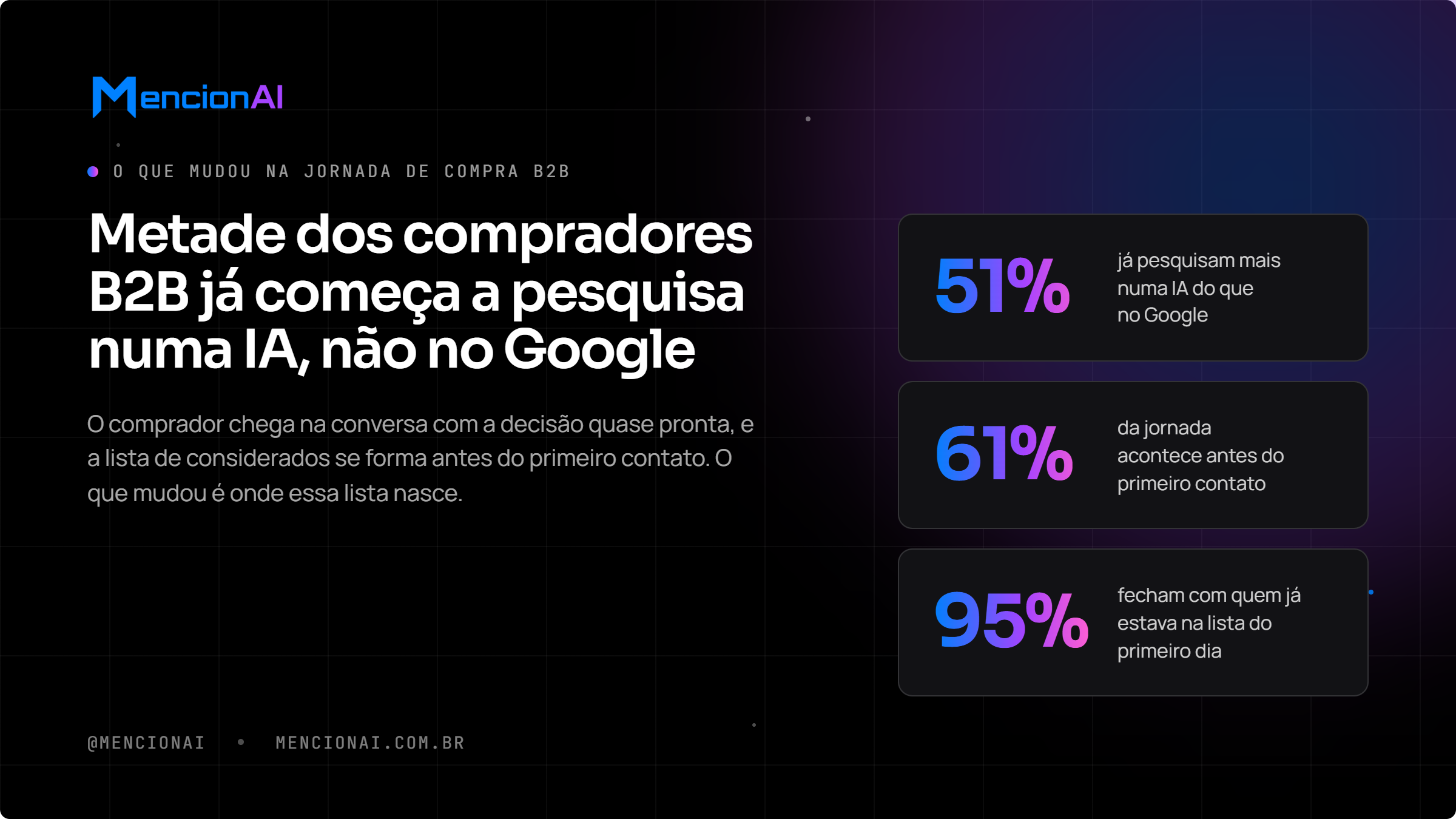
Tools like ChatGPT, Gemini, and Perplexity already account for a growing share of initial searches. Instead of clicking organic links, users receive synthesized answers that cite specific sources. This shortens the discovery phase and raises the importance of appearing in those answers with authority and accuracy.
Differences Between B2B and B2C
In B2C, the journey is shorter, more emotional, and influenced by reviews, social media, and instant recommendations. AI personalizes suggestions in real time, but the final decision usually happens within minutes or hours. In B2B, the cycle is longer, involves multiple stakeholders, and requires technical content, case studies, and detailed comparisons. AI acts as a corporate research assistant, filtering reports, white papers, and mentions in specialized forums before any contact with sales.
Why GEO Has Become Essential
Generative Engine Optimization (GEO) focuses on optimizing content to be cited by generative models. Unlike traditional SEO, GEO prioritizes clarity, data structure, primary source citations, and presence in trusted databases. Brands that apply GEO significantly increase the likelihood of being mentioned in AI answers, generating qualified traffic and brand authority without relying solely on clicks.
Practical Strategies for B2B and B2C
B2C companies should invest in conversational content, structured FAQs, and authentic reviews that AI can easily extract. In B2B, the focus shifts to original reports, proprietary data, and mentions in specialized publications. In both cases, monitoring citations in real time enables rapid positioning adjustments.
Visibility Metrics and Tools
Tracking how often your brand is cited by AI assistants, which competitors appear, and which topics reference you has become essential. GEO platforms offer dashboards that measure generative visibility, track mentions, and alert teams to content improvement opportunities.
Conclusion and Next Steps
AI does not replace the buying journey, but it reorganizes it. Brands that adopt GEO now gain a competitive advantage by being chosen as trusted sources by generative models. Start by auditing your current content, structuring your data, and tracking citations to ensure your presence in the answers that truly matter.
How to apply this in 30 days (Brazil-first)
Brazilian buyers mix PT-BR and English prompts. Treat Brazil as the primary market even when you also ship English pages.
- Baseline 10 buyer-intent prompts in Portuguese and English across ChatGPT, Gemini, Claude, Perplexity, Grok, and DeepSeek.
- Ship one comparison page and one FAQ hub with stable heading IDs, using buyer language such as “melhor X para PME no Brasil”.
- Publish /llms.txt and allow documented AI crawlers only — do not invent tokens for Grok or DeepSeek.
- Re-scan weekly and map citation gaps to the next content change.
MencionAI tracks those models for marketing and growth teams in Brazil so you can see which answers cite you after each ship.
FAQ
What is E-E-A-T and how does it help AI citations?
Google Search Central describes E-E-A-T as experience, expertise, authoritativeness, and trustworthiness — trust first. Named authors, first-hand experience, and citations to official docs help people judge who stands behind the page. Structured data is not required for AI Overviews, but Article, Person, and Organization markup still help Search understand the author and publisher.