3 Signs Your Brand Is Invisible to AI (and How to Reverse It)
MencionAI Blog Pedro Vianna Quintian
MencionAI Blog Sep 10, 2026 · 3 min read / GEO
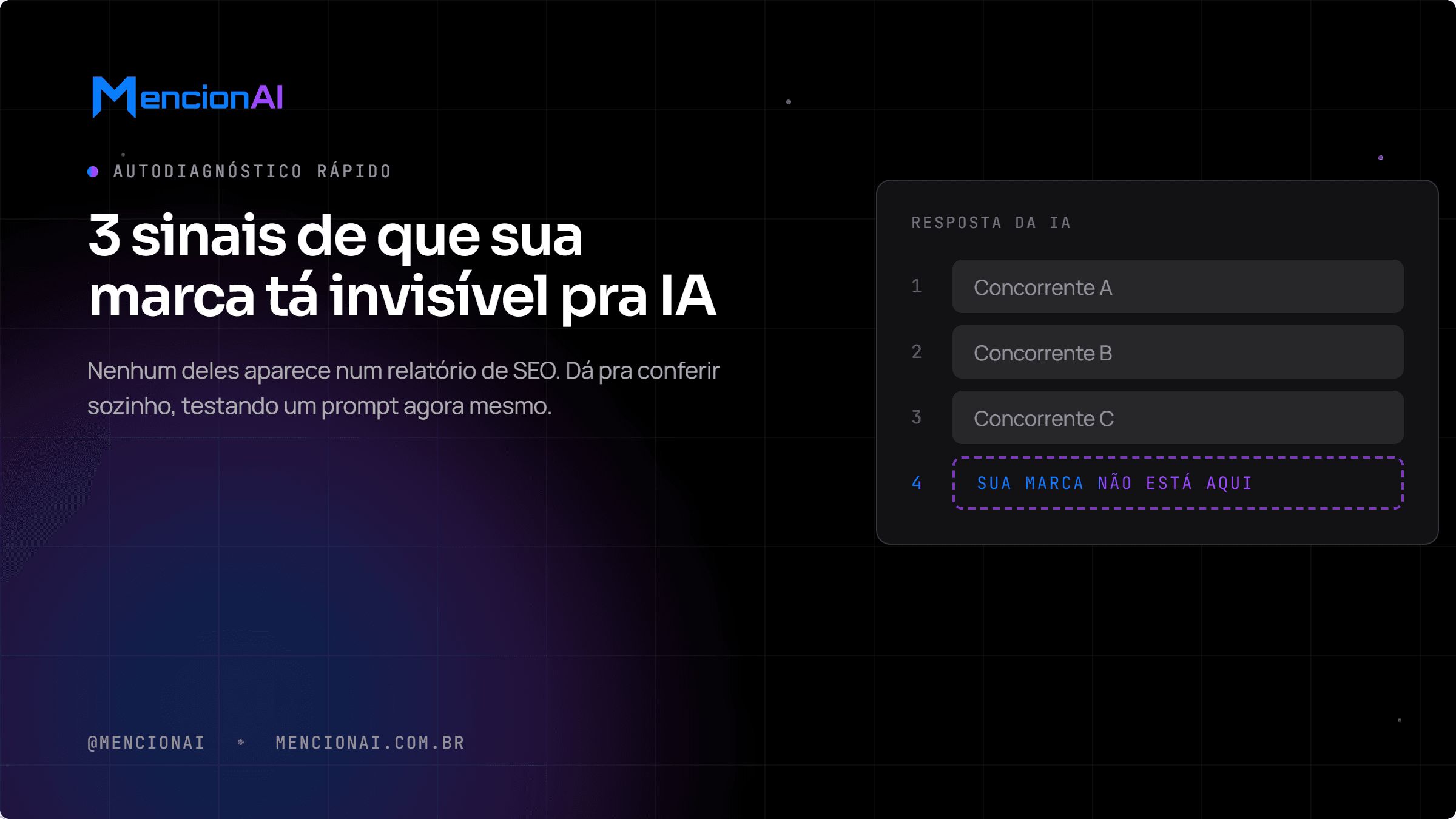
Here are the 3 signs I use to determine if a brand is being ignored by AI responses. None of these appear in SEO reports because it's a different game. You can test this yourself without any tools, just by opening ChatGPT or Gemini right now.
Quick answer
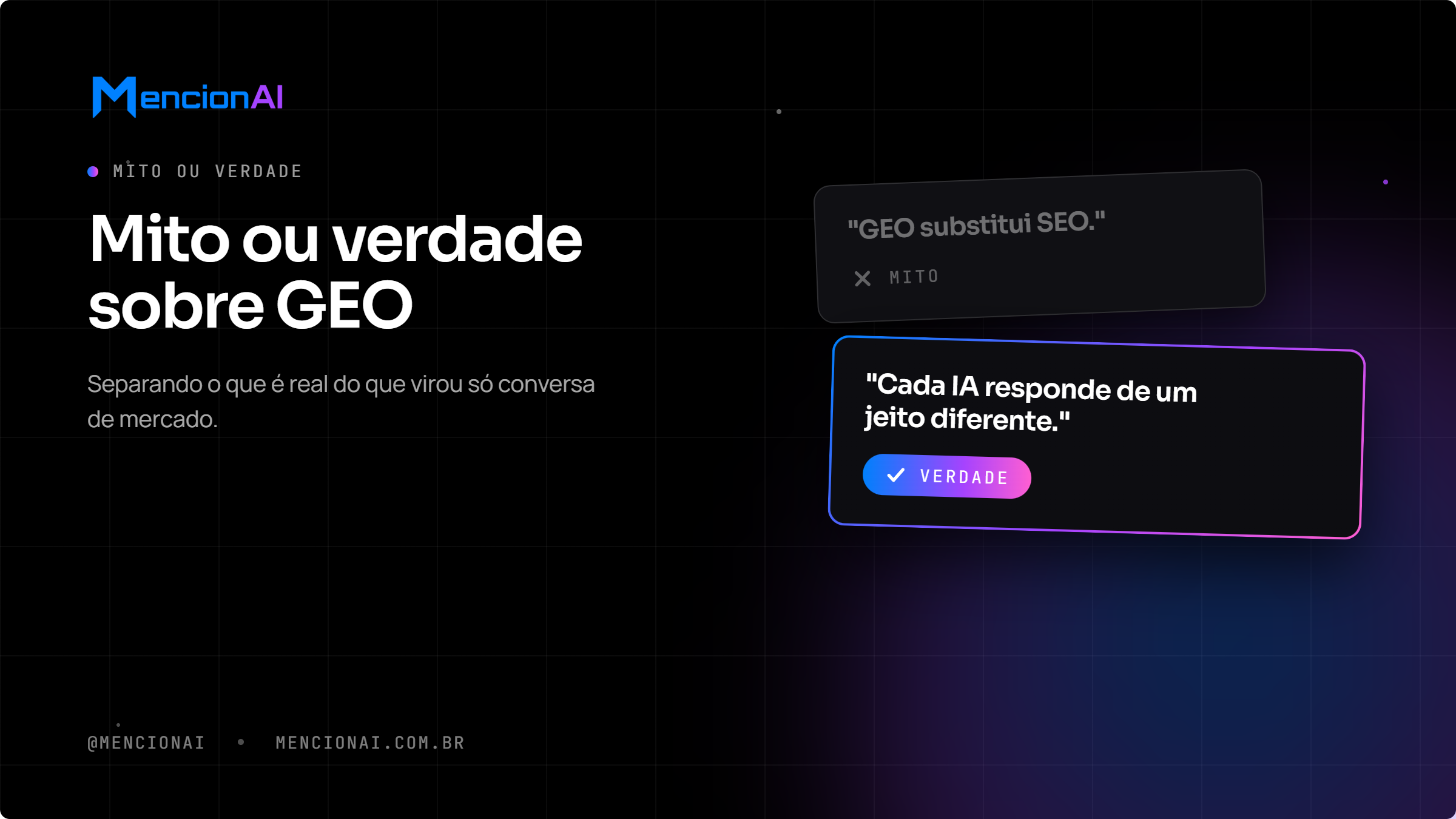
No. SEO ranks links on a results page. GEO measures whether your brand is cited inside AI answers on ChatGPT, Gemini, Claude, Perplexity, Grok, and DeepSeek.
Summary
- Test a prompt like "what is the best tool for [your category]" and see if your company name appears.
- Sometimes the brand is mentioned, but without any real source backing it up, like "there’s also [your brand]," without a link, page, or any context.
- The most straightforward test is to ask "[your brand] or [competitor], which is better?
- AI models build responses based on real mentions on the web, articles, forums, reviews, and comparison pages.
- Running these 3 tests already shows where you stand.
Sign 1: Your Brand Never Appears in Responses
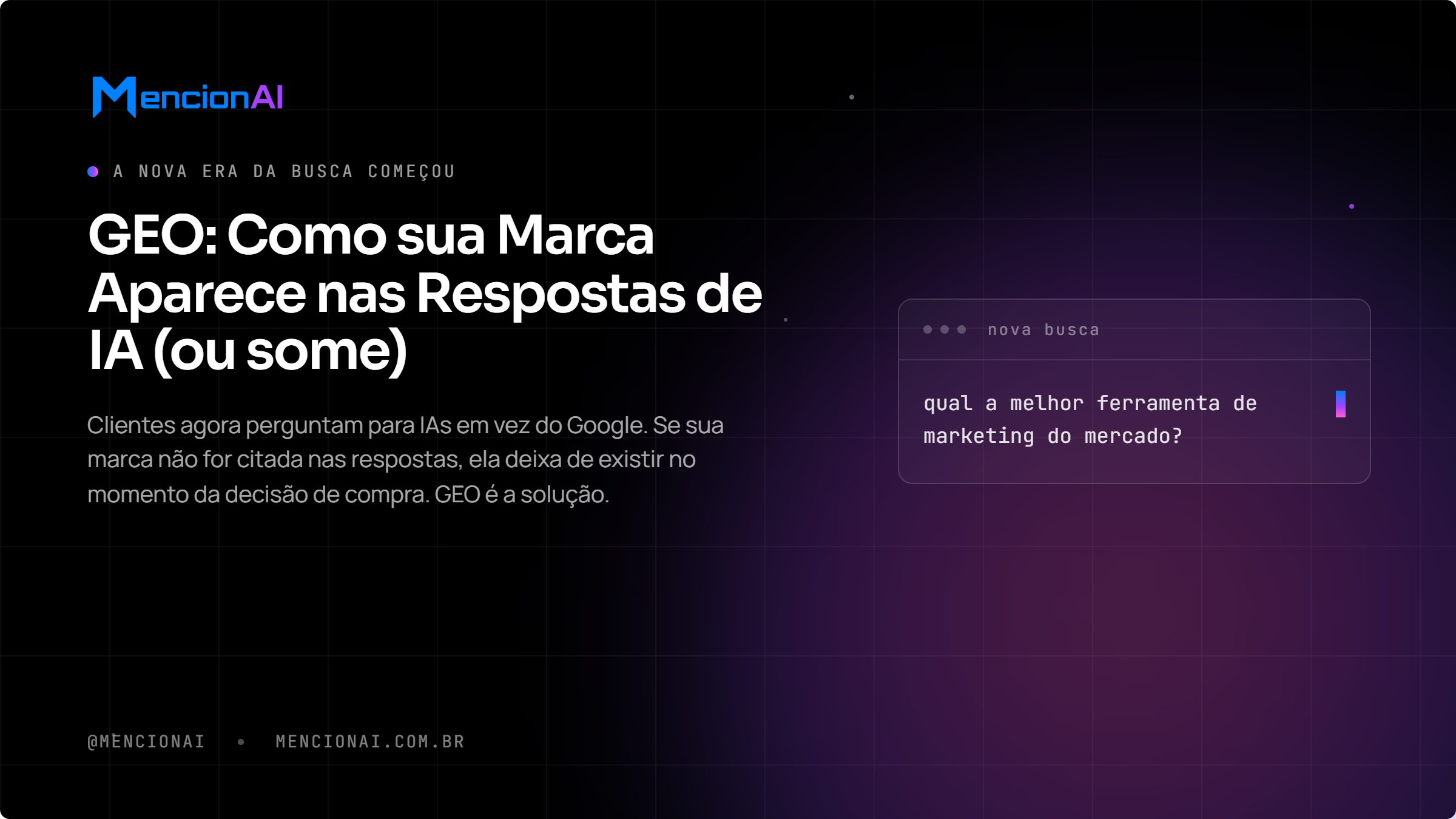
Test a prompt like "what is the best tool for [your category]" and see if your company name appears. If it doesn’t show up after 2 or 3 different attempts, that’s already a sign.
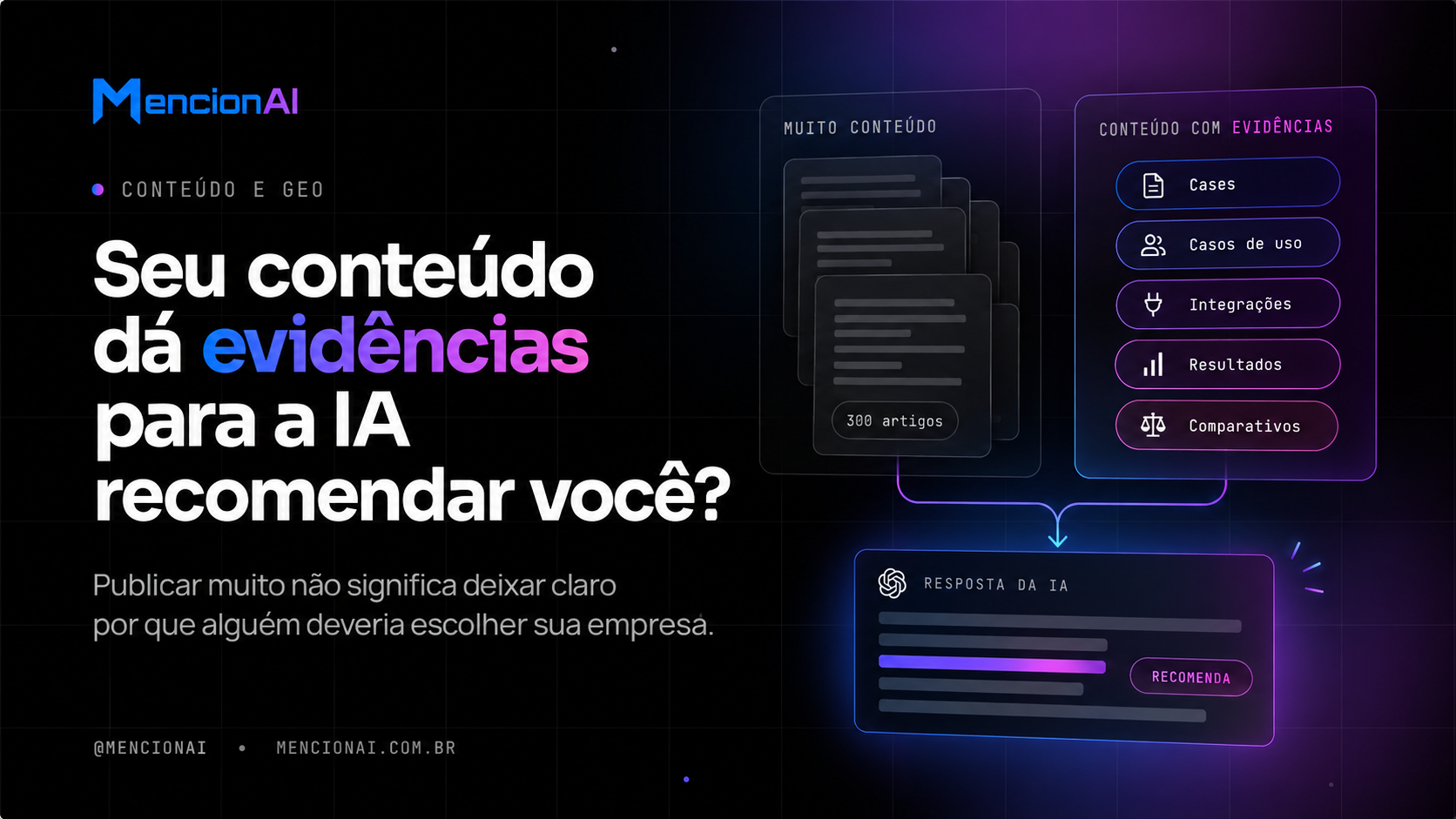
AI models prioritize brands that have consistent mentions in quality content, trustworthy sources, and structured data. If your brand hasn’t built this yet, the model simply has no basis to pull you in.
Sign 2: It Appears, But Only in Passing
Sometimes the brand is mentioned, but without any real source backing it up, like "there’s also [your brand]," without a link, page, or any context. This happens because the model didn’t find enough material to go beyond just the name.
Without a structured page, clear comparisons, and mentions in authoritative places, AI treats your brand as secondary information. This makes it hard for it to become a real consideration for those asking.
Sign 3: It’s Missing in Direct Comparisons
The most straightforward test is to ask "[your brand] or [competitor], which is better?" If your brand doesn’t even appear as an option in this comparison, the problem is bigger because the AI has already filtered you out before even comparing.
Why This Happens
AI models build responses based on real mentions on the web, articles, forums, reviews, and comparison pages. Without volume and quality in this, your brand doesn’t enter the context that the model uses to construct the response. Schema markup, comparison pages, and updated content help the model find you, but first, you need to have something to find.
What You Can Do About It Now
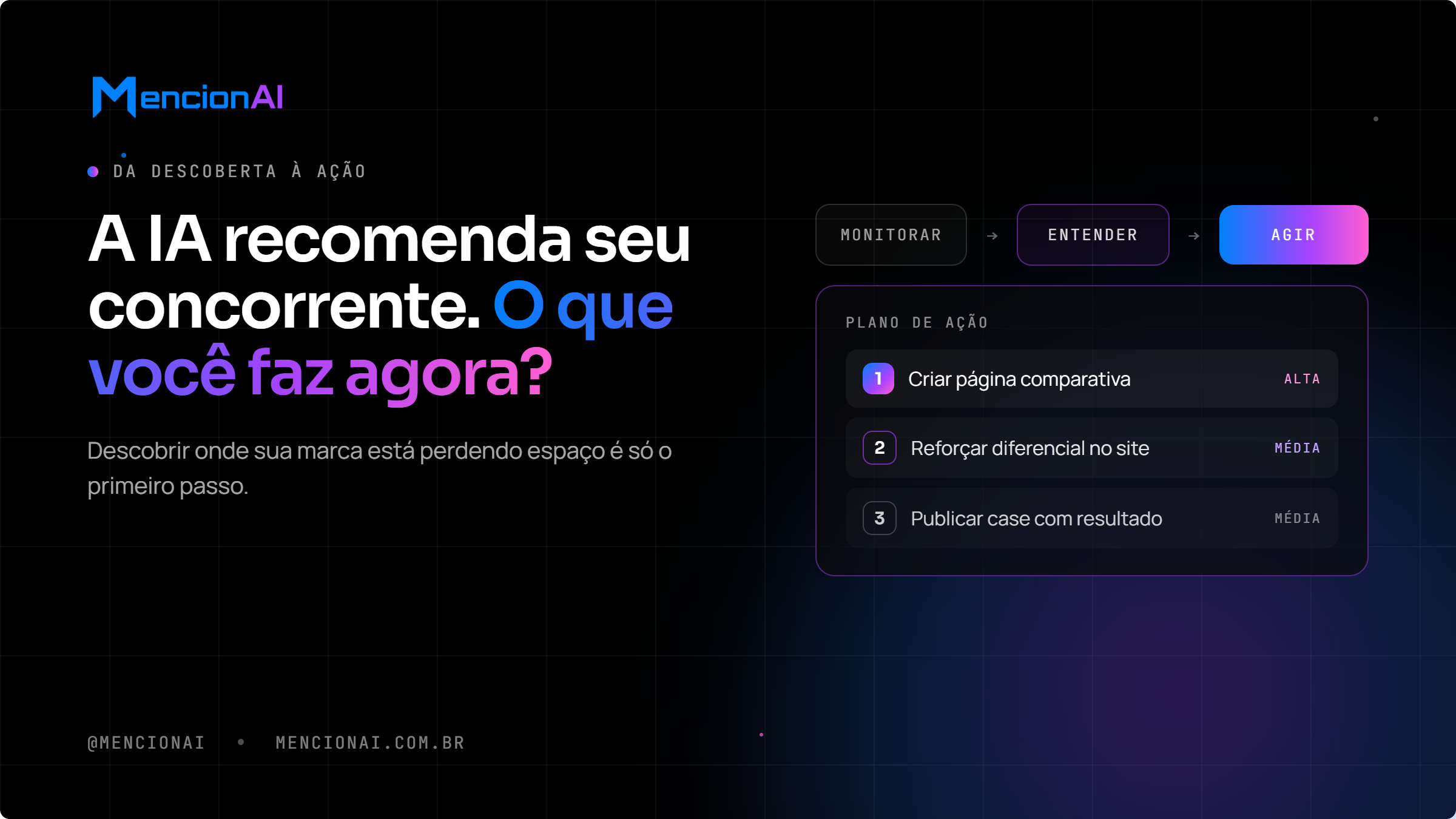
Running these 3 tests already shows where you stand. The next step is to monitor this regularly, not just once, because AI responses change over time, and discovering a gap without ongoing tracking won’t resolve it on its own.
That’s why we built MencionAI. We monitor how and when your brand appears in major AIs every day, instead of just a one-time check, and provide a practical action plan for each gap found.
If you want to run this diagnosis on your brand, schedule a demo. You can run the 3 signs above directly in the tool, across multiple AIs at once, with coverage of mentions, share of voice, and a ready-to-execute action plan.
Pedro, CMO of MencionAI
FAQ
Is GEO a replacement for SEO?
No. SEO ranks links on a results page. GEO measures whether your brand is cited inside AI answers on ChatGPT, Gemini, Claude, Perplexity, Grok, and DeepSeek.
What should we publish first for AI citations?
Comparison pages, FAQ hubs with stable anchors, llms.txt, and Organization schema — then re-scan the same prompts.
What is E-E-A-T and how does it help AI citations?
Google Search Central describes E-E-A-T as experience, expertise, authoritativeness, and trustworthiness — trust first. Named authors, first-hand experience, and citations to official docs help people judge who stands behind the page. Structured data is not required for AI Overviews, but Article, Person, and Organization markup still help Search understand the author and publisher.