
AI Brand Monitoring: Discover Where Your Brand Appears and How It’s Cited
MencionAI Blog Vinícius Guimarães de Oliveira
MencionAI Blog May 11, 2026 · 6 min read / Monitoring
Monitoring your brand in AI is no longer optional. As users ask questions directly to assistants like ChatGPT, Gemini, and Perplexity, the answers start shaping perception, preference, and even purchase decisions — often before anyone visits your website.
Quick answer
No. SEO ranks links on a results page. GEO measures whether your brand is cited inside AI answers on ChatGPT, Gemini, Claude, Perplexity, Grok, and DeepSeek.
Summary
- AI brand monitoring is the process of tracking how your company, products, executives, and competitors appear in responses generated by AI models and AI-powered search engines.
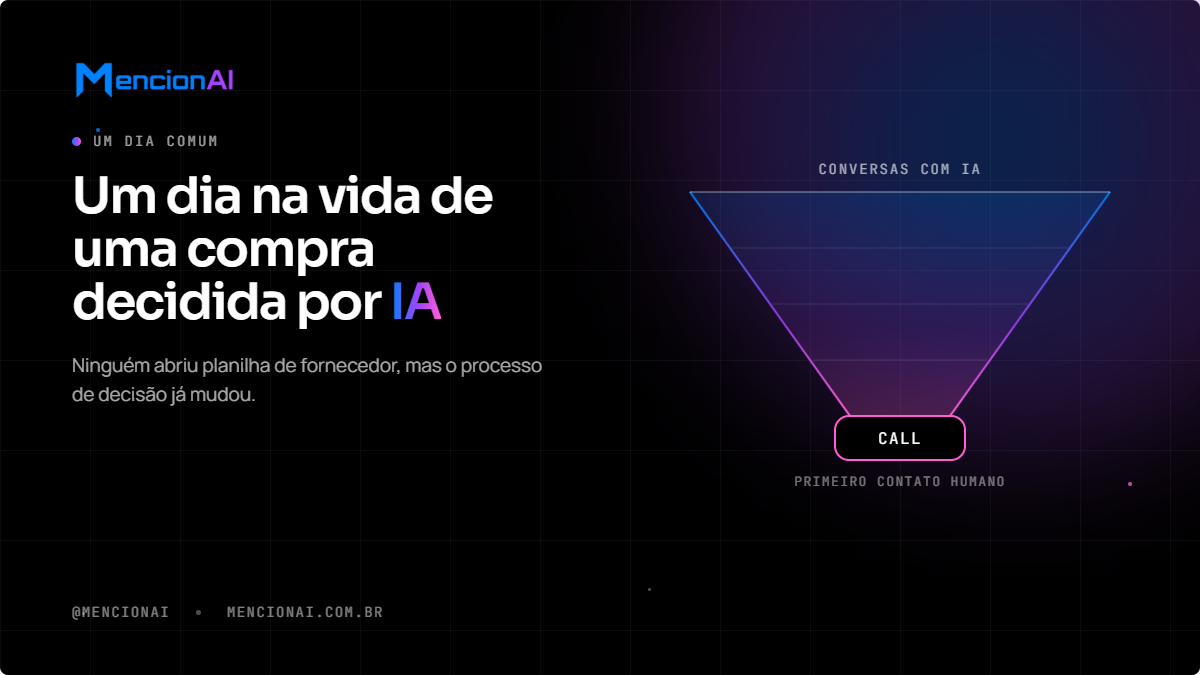
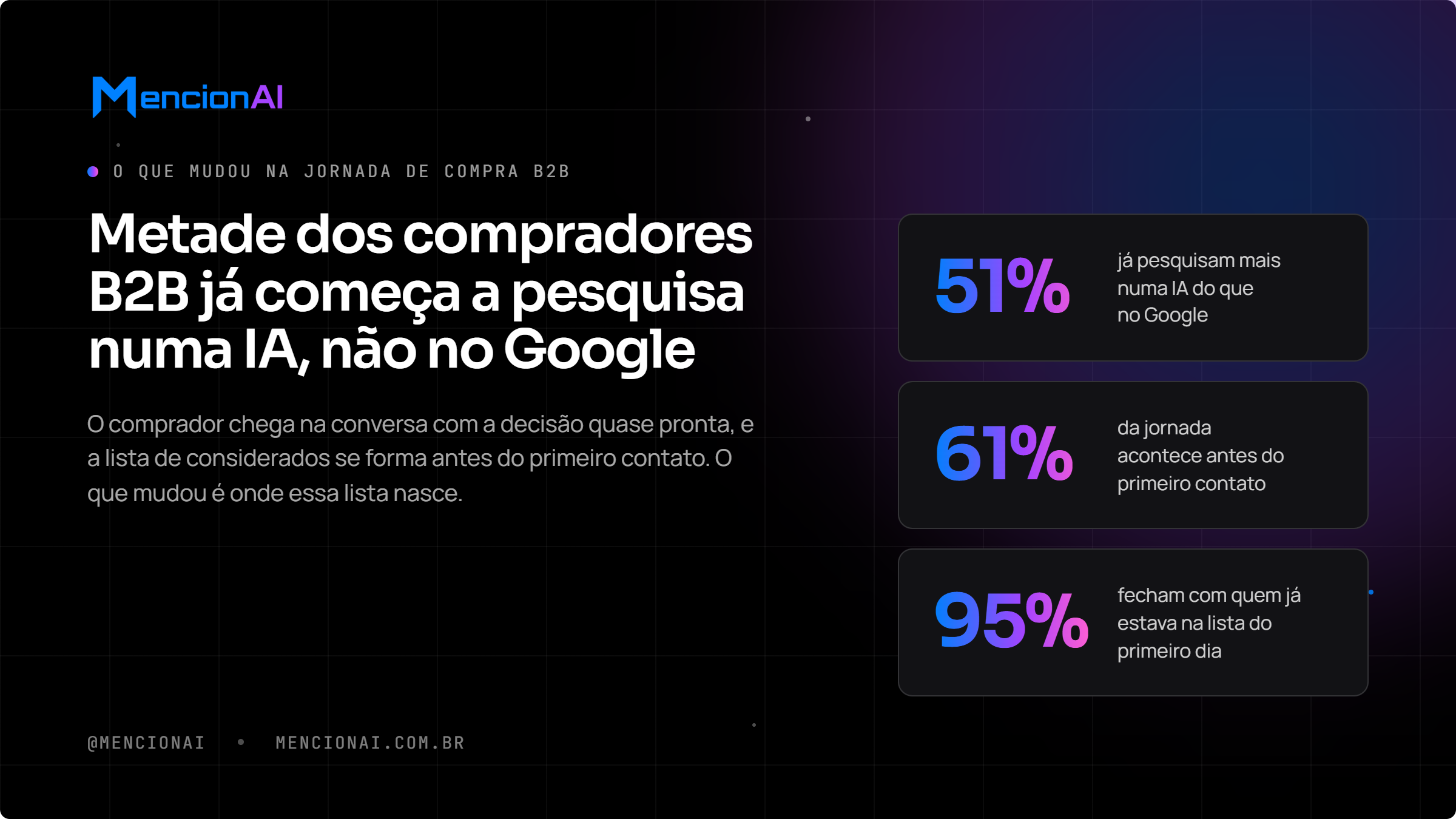
- AI is becoming a new intermediary between your company and the market.
- Your brand can appear across different AI surfaces, and each one requires specific attention: - Chatbots and conversational assistants: direct answers to category, comparison, and recommendation questions.
- To turn monitoring into action, look beyond simple brand-name occurrences.
- Without monitoring, your team is operating in the dark.
- A strong AI brand monitoring program starts with a set of real questions asked by your audience.
What AI brand monitoring is
AI brand monitoring is the process of tracking how your company, products, executives, and competitors appear in responses generated by AI models and AI-powered search engines. In practice, that means observing:
- whether your brand is mentioned;
- which questions it appears in;
- what context it is associated with;
- which sources are cited;
- whether the AI describes your company accurately, neutrally, or incorrectly.
Unlike traditional social listening, which monitors social media and press coverage, the focus here is the AI discovery layer. That is where users research, compare options, and form opinions without browsing dozens of pages.
Why this matters for your brand
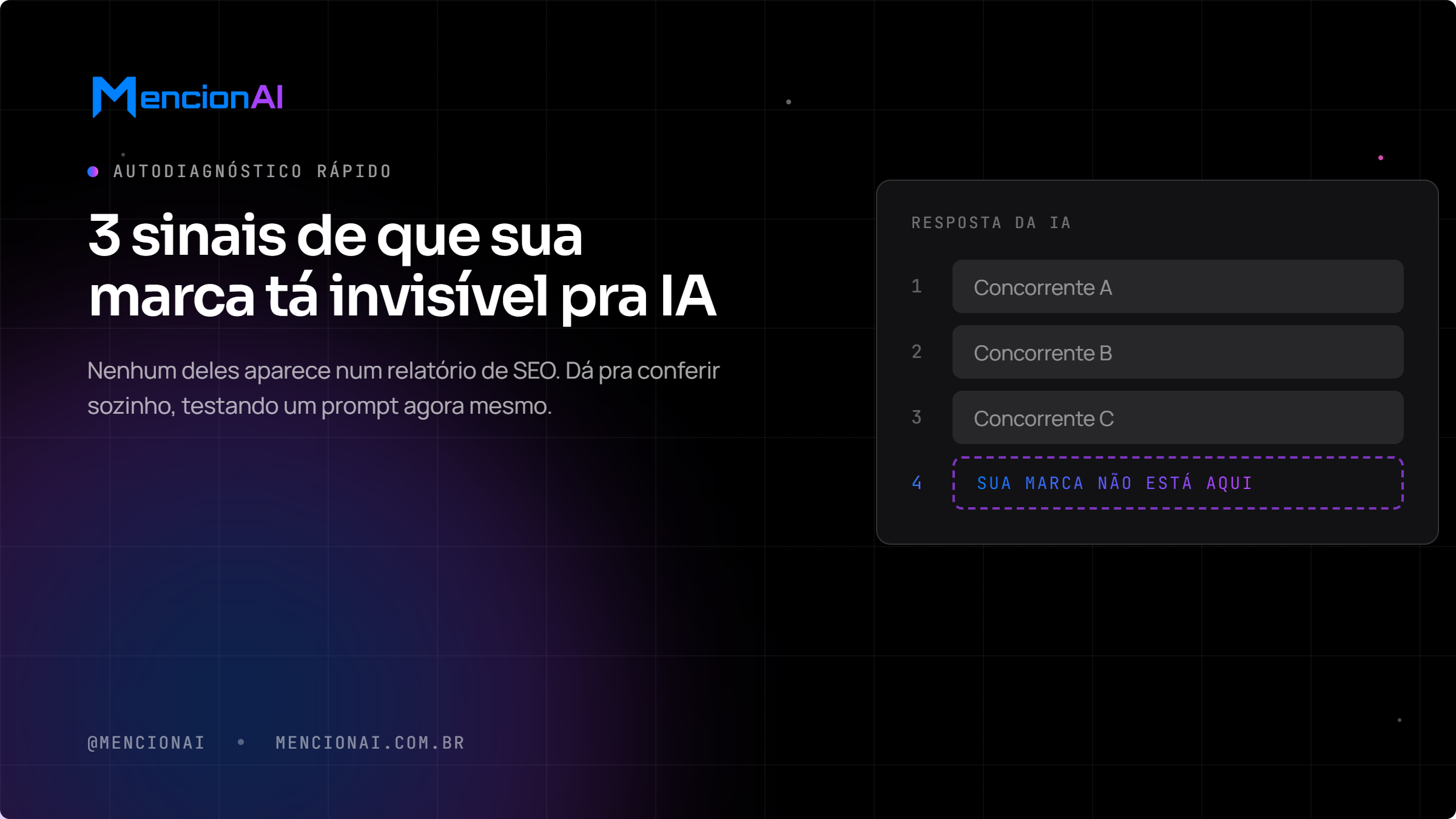
AI is becoming a new intermediary between your company and the market. When a model answers with “the best options,” “who leads the industry,” or “which tool it recommends,” it is shaping brand visibility in real time.
This matters for three main reasons:
-
The first impression may happen in the AI response. If your brand does not appear, or appears with weak context, you lose relevance before consideration.
-
Mentions influence trust. A citation in an AI-generated answer works as a credibility shortcut, especially in B2B decisions.
-
Errors spread quickly. If AI associates your brand with the wrong segment, a competitor, or outdated information, that can affect acquisition and reputation.
In complex buying environments, tracking organic rankings alone is not enough. You need to understand your brand presence in the final answer the user consumes.
Where your brand can be mentioned by AI
Your brand can appear across different AI surfaces, and each one requires specific attention:
- Chatbots and conversational assistants: direct answers to category, comparison, and recommendation questions.
- AI Overviews and assisted results: summaries generated from multiple sources.
- AI-powered search tools: interfaces that synthesize options, reviews, and supporting pages.
- Discovery and productivity platforms: assistants integrated into search, browsers, and work environments.
The key point is that a mention does not depend only on your website. It also depends on how information about your brand circulates across the web: third-party pages, directories, reviews, press, communities, and public databases.
What you need to track in monitoring
To turn monitoring into action, look beyond simple brand-name occurrences. The most useful indicators are:
1. Mention frequency
How many times does your brand appear across a set of relevant prompts? This helps measure presence by topic, segment, and search intent.
2. Context type
Does AI mention your company as a leader, alternative, example, recommendation, or comparison? Context changes the value of the mention completely.
3. Sentiment and accuracy
Is the response positive, neutral, or negative? And, more importantly, is it correct? A frequent but inaccurate mention can be worse than no mention at all.
4. Cited sources
Which pages are being used to support the answer? If AI keeps relying on the same domains, that points to clear opportunities for content and authority optimization.
5. AI share of voice
How does your visibility compare to competitors in the most strategic questions? This metric shows who is dominating the conversation in generative answers.
The risk of not monitoring
Without monitoring, your team is operating in the dark. That creates risks such as:
- lost qualified demand to more frequently cited competitors;
- inconsistent messaging around positioning and differentiation;
- wasted PR and content opportunities;
- reputation exposed to hallucinations and outdated information;
- marketing decisions without evidence, based on perception rather than data.
In GEO, the lack of data is especially dangerous because models can change quickly. A source that supports your presence today may no longer be prioritized tomorrow.
How to structure a monitoring program
A strong AI brand monitoring program starts with a set of real questions asked by your audience. Instead of tracking only generic terms, organize prompts by intent:
- discovery: “what are the best solutions for…”;
- comparison: “X vs Y”;
- evaluation: “is it worth using…”;
- trust: “reliable company for…”;
- support: “how does it work…”;
- category: “who are the leaders in…”.
Then track the results by:
- model or platform;
- language and region;
- prompt type;
- brand presence;
- cited sources;
- changes over time.
This process reveals actionable patterns. You will know not only whether the brand appears, but which questions it needs to appear in more often and which digital assets are influencing the answer.
How to turn monitoring into action
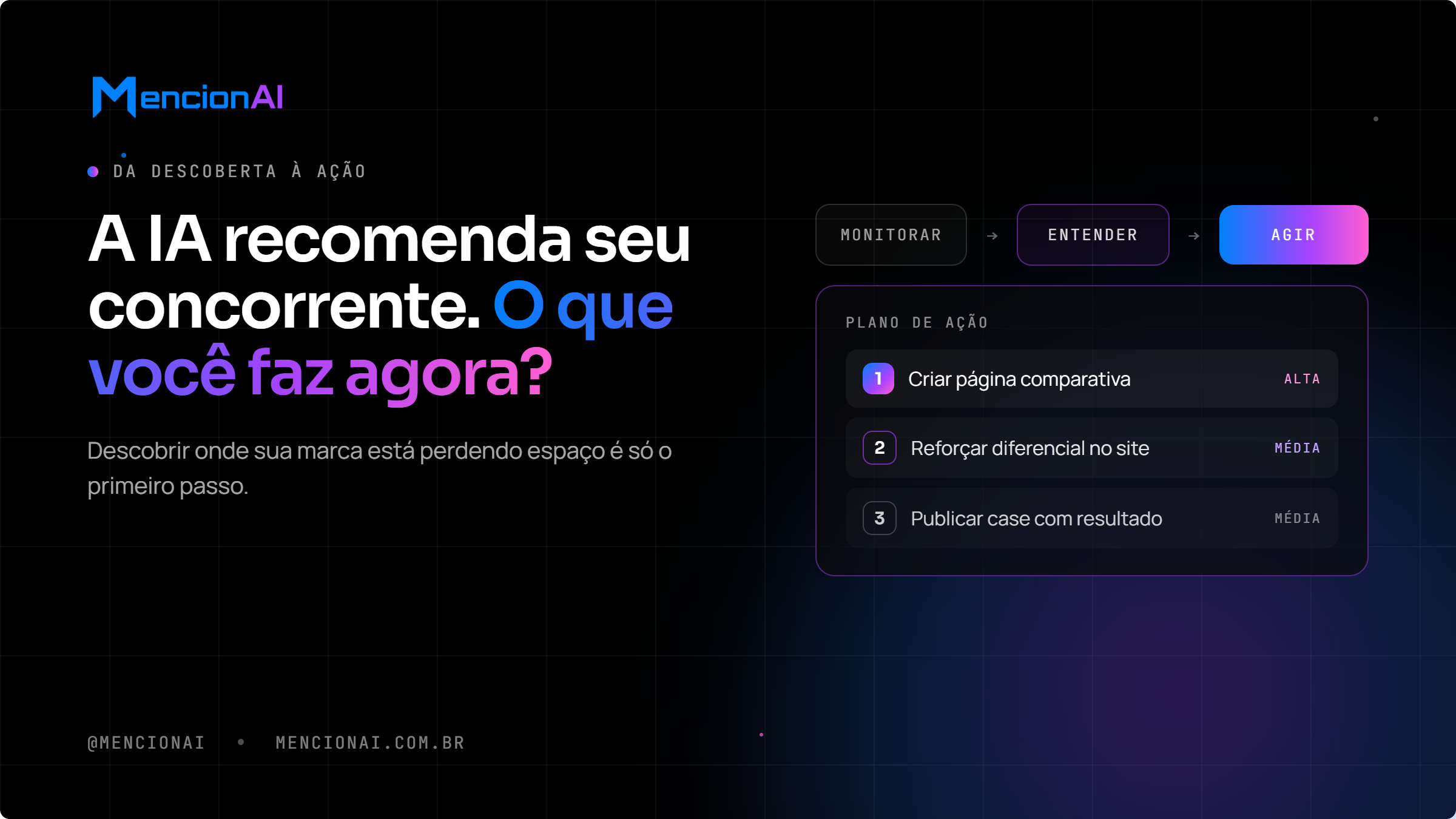
Monitoring without action does not create competitive advantage. Use the insights to guide four areas:
Content optimization
Create or refine pages that answer the market’s most common questions, with clear language, scannable structure, and strong semantic alignment.
Authority building
Appearing in trusted mentions, reviews, lists, and relevant publications increases the chance of being cited by AI.
Reputation management
Correct inconsistent information in profiles, directories, and third-party pages that feed the models.
Competitive intelligence
Understand which competitors are gaining AI visibility and why. This helps identify content, PR, and distribution gaps.
MencionAI’s role in this process
MencionAI helps marketing teams and founders monitor AI visibility, track citations, and understand when and how the brand appears in answers. Instead of relying on manual checks, you can follow brand presence more consistently and identify GEO opportunities based on data.
With this kind of monitoring, your team stops asking only “are we ranking?” and starts answering more strategic questions like “are we being cited?”, “by which sources?”, and “what needs to change for us to appear more often?”.
Conclusion
AI brand monitoring is a new discipline, but it is already essential. If AI is influencing discovery, comparison, and choice, your brand needs to know where it appears, how it is described, and which sources are shaping that perception.
Those who monitor early gain an advantage. Those who act on data can improve visibility, protect reputation, and win space in the answers that really matter.
FAQ
Is GEO a replacement for SEO?
No. SEO ranks links on a results page. GEO measures whether your brand is cited inside AI answers on ChatGPT, Gemini, Claude, Perplexity, Grok, and DeepSeek.
What should we publish first for AI citations?
Comparison pages, FAQ hubs with stable anchors, llms.txt, and Organization schema — then re-scan the same prompts.
What is E-E-A-T and how does it help AI citations?
Google Search Central describes E-E-A-T as experience, expertise, authoritativeness, and trustworthiness — trust first. Named authors, first-hand experience, and citations to official docs help people judge who stands behind the page. Structured data is not required for AI Overviews, but Article, Person, and Organization markup still help Search understand the author and publisher.