How to Compare Your Brand with Competitors in AI Responses
MencionAI Blog Pedro Quintian
MencionAI Blog Oct 06, 2026 · 4 min read / Competition
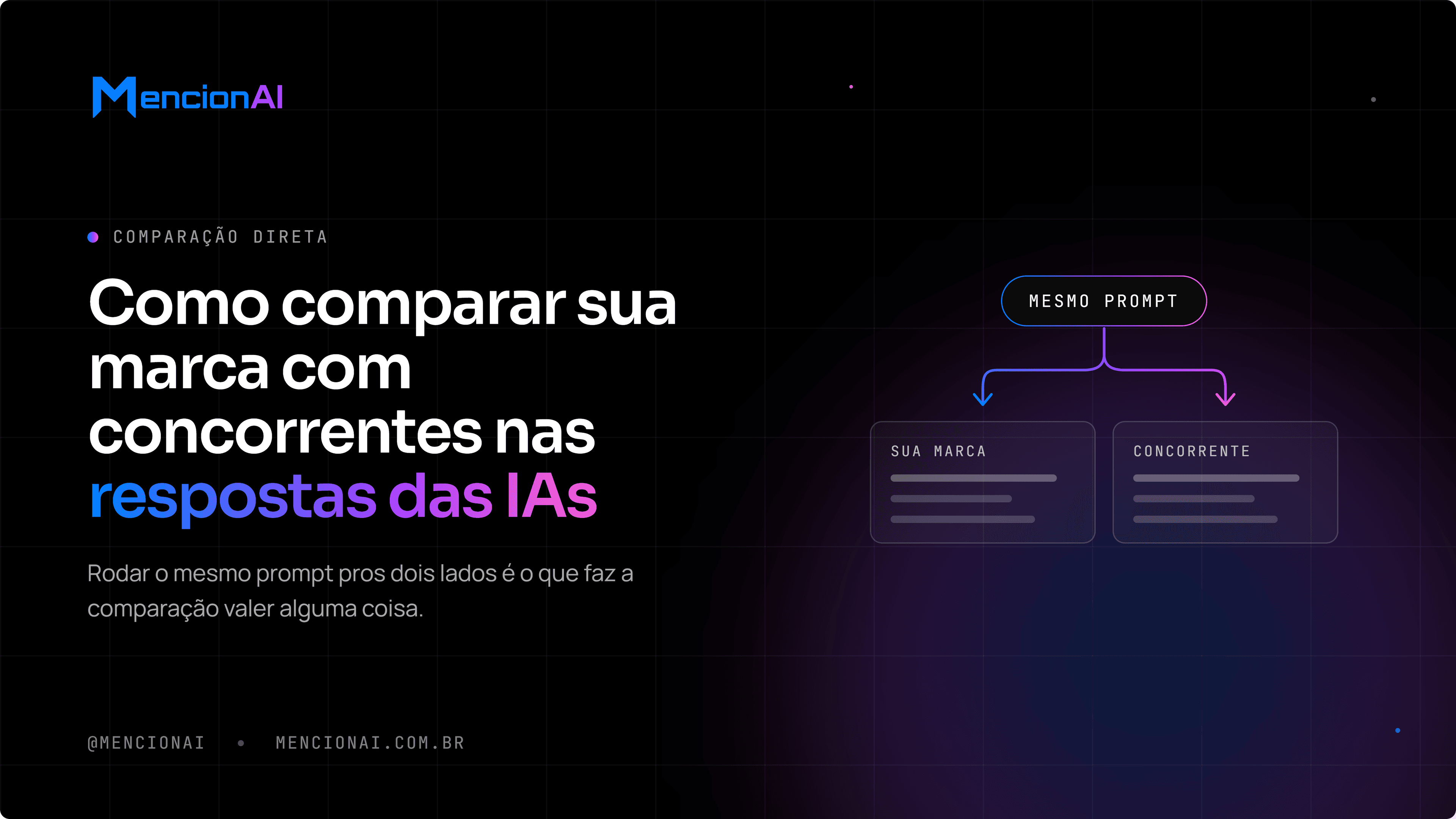
Running the same prompt for both sides is what makes the comparison meaningful.
Quick answer
No. SEO ranks links on a results page. GEO measures whether your brand is cited inside AI answers on ChatGPT, Gemini, Claude, Perplexity, Grok, and DeepSeek.
Summary
- Use questions that describe a need or category without mentioning any brand, such as "what tools exist for X" or "what is the best option for Y".
- Frequency: how many times each brand appears in the same prompts.
- A single round is just a snapshot; it doesn’t show trends.
- This post summarizes the main mechanisms.
- Does GEO replace SEO? No. SEO ranks links on the SERP.
It seems obvious, but it’s the most common mistake in this type of check: asking one thing to test your brand and another to test the competitor, or comparing an execution in ChatGPT with an execution in Gemini as if they were equivalent. This is not a comparison; it’s just two isolated responses without any common basis to say which brand is performing better.
How to Choose the Prompts
Use questions that describe a need or category without mentioning any brand, such as "what tools exist for X" or "what is the best option for Y". A prompt that already mentions a specific brand generates a response focused only on that brand, which is not suitable for comparison.
The central point is to run the same prompts for both sides in the same round. Never compare different executions or different models as if they were equivalent, because then the difference that appears may come only from the natural variation between executions, not from a real difference between the brands.
What to Look for in Each Execution
Frequency: how many times each brand appears in the same prompts. Position: the order when the response lists options. Share of Voice: the proportion of total space that each brand occupies compared to competitors. Cited sources: whether the same domains are used for both sides or not. And how the AI describes each brand, such as first option, alternative, or with reservations.
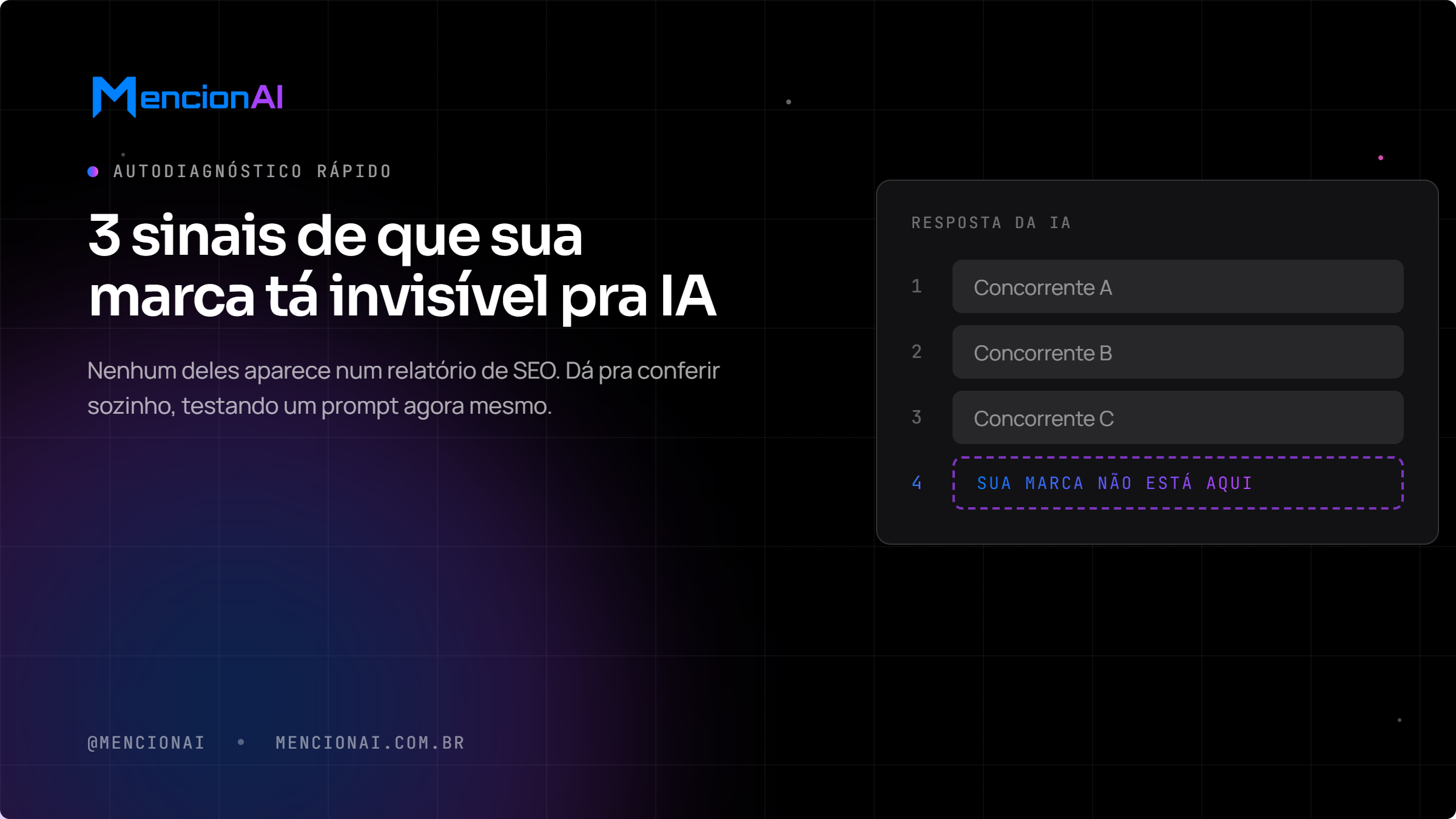
In a real example, a competitor appeared in 8 out of 10 executions, always citing the same third-party page as a source, while the analyzed brand appeared in 3 out of 10, with no own source cited. This already points to two gaps at the same time: less frequency of appearance and absence as an own source, two different problems that require different actions.
Real Comparison Happens Over Time
A single round is just a snapshot; it doesn’t show trends. Repeating the same set of prompts periodically shows whether the difference is decreasing, increasing, or stagnant, and this indicates whether it’s worth investigating before reacting to an isolated result. If a competitor starts appearing more frequently than before, the next step is to understand what changed in their presence, such as new content or a new source citing them, before any reaction.
The Complete Methodology in One Guide
This post summarizes the main mechanisms. The guide How to Compare Your Brand with Competitors in AI Responses? details the entire methodology, including how to investigate prompt by prompt when the comparison points to a specific competitor standing out.
At MencionAI, this comparison happens automatically within regular monitoring: the same prompts are executed repeatedly in the plan's models, and the platform records frequency, position, Share of Voice, and sources for each registered competitor, side by side with those of the brand itself.
Frequently Asked Questions
Does GEO replace SEO? No. SEO ranks links on the SERP. GEO measures if your brand is cited in the responses of ChatGPT, Gemini, Claude, Perplexity, Grok, and DeepSeek.
What should I publish first to be cited by AIs? Comparative pages, FAQs with stable anchors, llms.txt, and Organization schema — then re-scan the same prompts.
What is E-E-A-T and how does it help AI citations? Google Search Central describes E-E-A-T as experience, expertise, authority, and trust — trust being the foremost. Named authors, firsthand experience, and citations to official documents help judge who signs the page. Structured data is not required for AI Overviews, but Article, Person, and Organization still help Search understand author and publisher.
FAQ
Is GEO a replacement for SEO?
No. SEO ranks links on a results page. GEO measures whether your brand is cited inside AI answers on ChatGPT, Gemini, Claude, Perplexity, Grok, and DeepSeek.
What should we publish first for AI citations?
Comparison pages, FAQ hubs with stable anchors, llms.txt, and Organization schema — then re-scan the same prompts.
What is E-E-A-T and how does it help AI citations?
Google Search Central describes E-E-A-T as experience, expertise, authoritativeness, and trustworthiness — trust first. Named authors, first-hand experience, and citations to official docs help people judge who stands behind the page. Structured data is not required for AI Overviews, but Article, Person, and Organization markup still help Search understand the author and publisher.
Sources
- SparkToro and Gumshoe.ai: AIs are highly inconsistent when recommending brands or products
- OpenAI Help Center: Searching the web with ChatGPT
- Anthropic: Web search tool
- Google AI for Developers: Grounding with Google Search
- Schedule an analysis of your brand
- Google Search Central — Article structured data