
Building AI Authority: How to Become the Preferred Source for Generative Answers
MencionAI Blog Vinícius Guimarães de Oliveira
MencionAI Blog May 07, 2026 · 6 min read / AEO
Generative systems do not choose sources by chance. They tend to favor content that demonstrates clarity, consistency, expertise, and external trust signals. If you want your brand to appear in AI answers, you need to think beyond traditional SEO and build authority in an ecosystem where citation, context, and reputation matter as much as keywords.
Quick answer
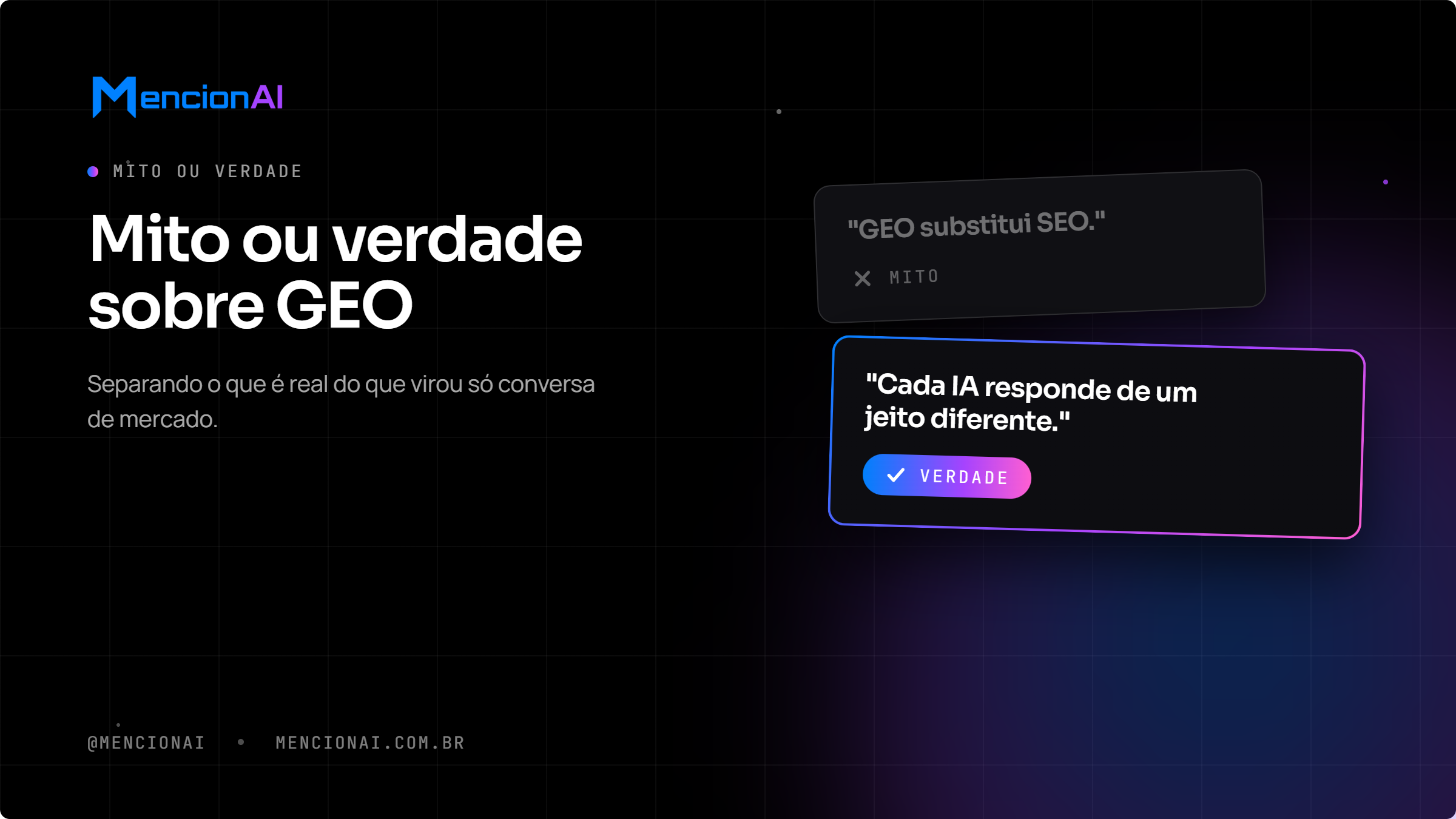
No. SEO ranks links on a results page. GEO measures whether your brand is cited inside AI answers on ChatGPT, Gemini, Claude, Perplexity, Grok, and DeepSeek.
Summary
- Being a preferred source for generative answers means having a high likelihood of being selected, cited, or summarized by AI models when a user asks a question relevant to your market.
- Building authority for GEO requires thinking about three fronts at the same time: content, entity, and reputation.
- To appear in generative answers, your content needs to be modular, verifiable, and semantically clear.
- AI authority is cumulative. A single great page is rarely enough.
- You do not need to guess whether the strategy is working.
- If you want to accelerate AI authority building, start with this plan: 1.
What it means to be a preferred source for AI
Being a preferred source for generative answers means having a high likelihood of being selected, cited, or summarized by AI models when a user asks a question relevant to your market. This does not depend only on classic organic rankings. AI evaluates, directly or indirectly, signals such as:
- topical consistency;
- depth and usefulness of the content;
- mentions and citations from trusted sources;
- clear and easily interpretable structure;
- presence of data, examples, and objective definitions.
In practice, AI looks to reduce uncertainty. The more your brand helps answer questions accurately, the more it becomes a candidate to be used as a reference.
How to optimize your content to be cited by AI
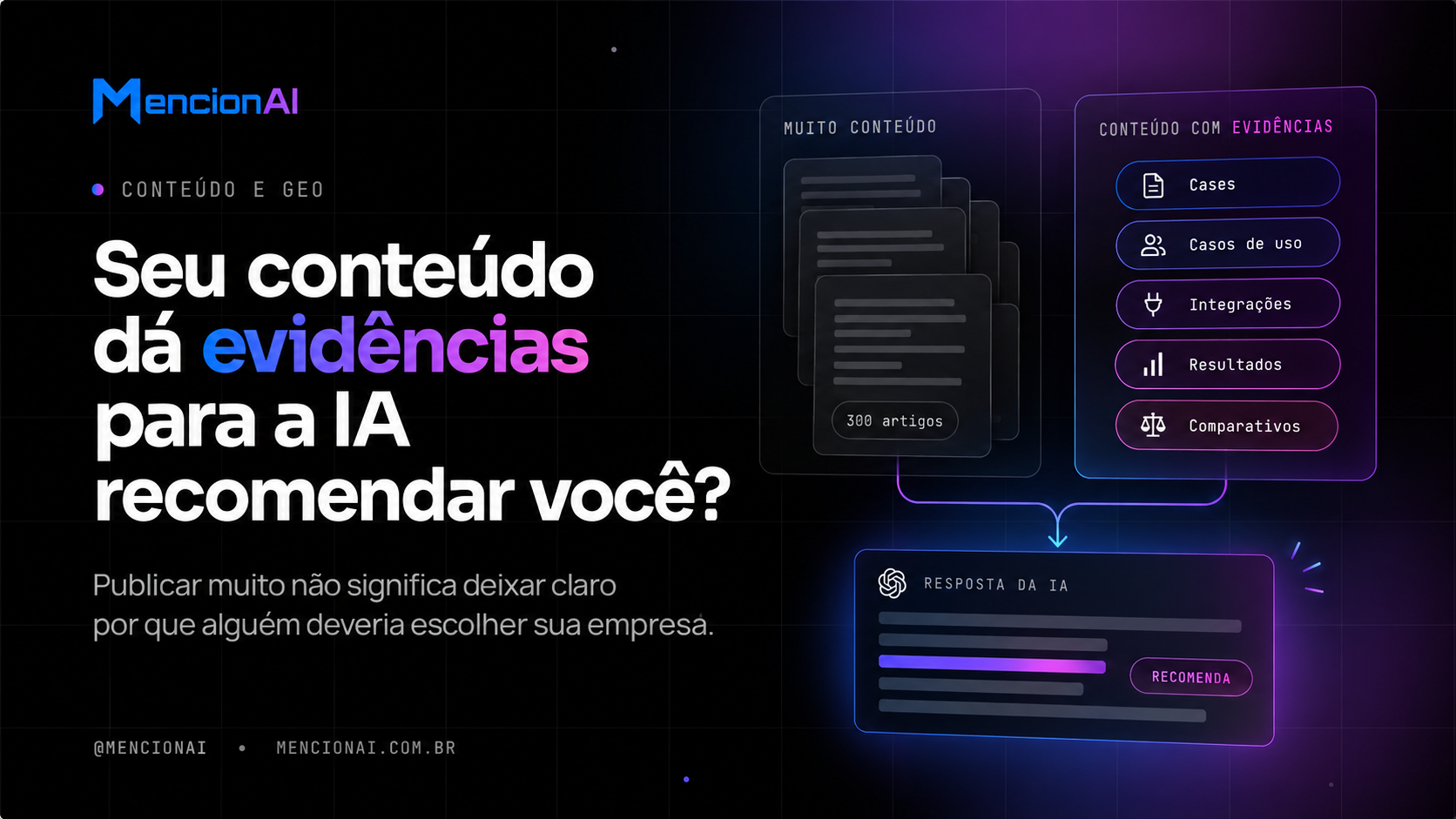
To appear in generative answers, your content needs to be modular, verifiable, and semantically clear.
Structure answers in reusable blocks
Each section should solve a micro-intent. AI often extracts short excerpts to build answers. For that reason, use descriptive subheadings, concise paragraphs, and direct answers at the beginning.
Use factual language
Avoid empty phrases like “the best solution on the market” without evidence. Prefer statements with context, criteria, and support. For example:
- instead of “our method is the most efficient,” say “this method reduces rework by centralizing validation and content distribution.”
- instead of “we are a benchmark,” show why, with data, case studies, and external coverage.
Include entities and related terms
AI understands content better when it connects to a broader semantic field. Use terms related to your niche, tools, processes, and comparisons. This helps models understand the context and relevance of the page.
Publish with search intent in mind
Ask yourself: “What question would a founder or marketer ask to land on this article?” Then build the page as the answer to that question. Pages that reflect clear search intent have greater potential to be reused in AI answers.
How to measure whether your brand is becoming a reference
You do not need to guess whether the strategy is working. It is possible to monitor AI visibility signals and adjust based on data.
Track indicators such as:
- frequency of citations in generative answers;
- brand presence in comparisons and lists;
- pages most mentioned by AI assistants;
- terms and questions where your brand appears;
- progress against competitors.
AI visibility monitoring tools, such as MencionAI, help identify where your brand is already cited, where it is losing space, and which content pieces have the highest potential to become references.
A practical framework to get started
If you want to accelerate AI authority building, start with this plan:
- choose 5 to 10 critical questions in your market;
- create or update content to answer each one in depth;
- standardize brand and author presence across all channels;
- seek mentions and citations from industry sources;
- monitor which pages and topics are being used by AI;
- continuously refine based on the gaps you observe.
This cycle turns your content marketing into a generative visibility asset, not just traffic.
Conclusion
Becoming the preferred source for generative answers requires more than producing content at scale. You need to build a brand that is understandable to machines and trustworthy to people. When content, entity, and reputation work together, your company stops competing only for position in Google and starts competing for space inside AI answers themselves.
The advantage belongs to those who start early: brands that structure their authority now will have a better chance of being cited, remembered, and recommended when users ask questions.
FAQ
Is GEO a replacement for SEO?
No. SEO ranks links on a results page. GEO measures whether your brand is cited inside AI answers on ChatGPT, Gemini, Claude, Perplexity, Grok, and DeepSeek.
What should we publish first for AI citations?
Comparison pages, FAQ hubs with stable anchors, llms.txt, and Organization schema — then re-scan the same prompts.
What is E-E-A-T and how does it help AI citations?
Google Search Central describes E-E-A-T as experience, expertise, authoritativeness, and trustworthiness — trust first. Named authors, first-hand experience, and citations to official docs help people judge who stands behind the page. Structured data is not required for AI Overviews, but Article, Person, and Organization markup still help Search understand the author and publisher.