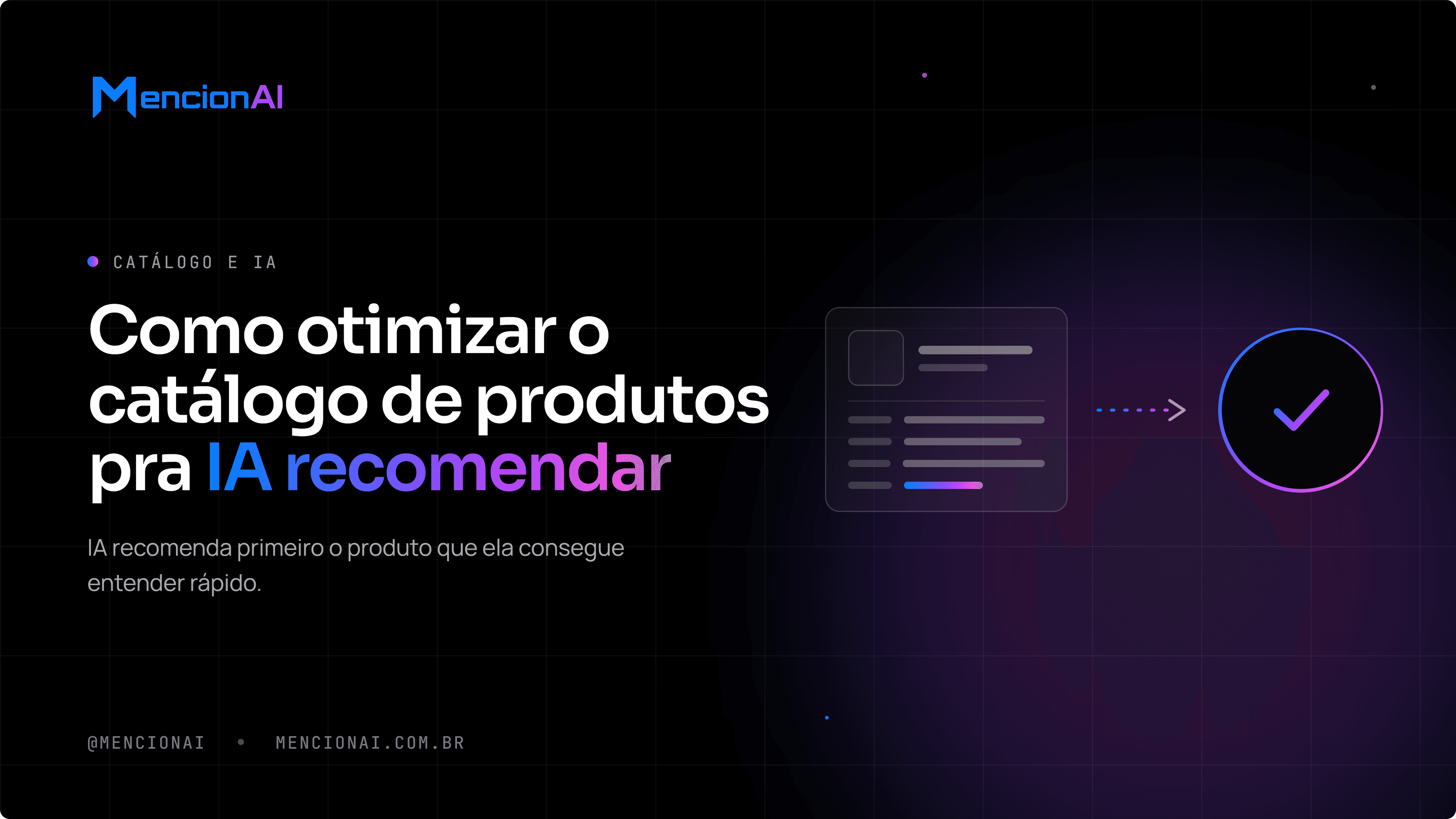
How to Optimize Your Product Catalog for AI Recommendations
MencionAI Blog Pedro Quintian
MencionAI Blog Oct 05, 2026 · 4 min read / Content
AI recommends the product it can understand quickly.
Quick answer
Google Search Central describes E-E-A-T as experience, expertise, authoritativeness, and trustworthiness — trust first. Named authors, first-hand experience, and citations to official docs help people judge who stands behind the page.
Summary
- A complete technical sheet matters more than sales text.
- A product with a vague description, such as "complete solution for your needs," or without a defined category, becomes harder to associate with a specific buyer prompt.
- Reviewing each sheet, filling attribute gaps, adjusting categories, and structuring data is catalog work, not marketing work.
- Does structured data guarantee my product will appear on ChatGPT?
This applies both to a buyer asking "which running shoes for hard surfaces" on ChatGPT and someone asking "which sustainable packaging supplier" on Perplexity. In either case, the model is reading a product sheet and deciding, in seconds, whether that item answers the question. An organized catalog facilitates this reading. A generic catalog complicates it, even when the product itself is good.
What AI Looks for in a Product Sheet
A complete technical sheet matters more than sales text. Dimensions, material, compatibility, and concrete use cases help the model understand what it is about, without needing to interpret loose text. A phrase like "the ideal solution for your daily life" doesn’t provide anything the AI can use. A phrase like "22-liter backpack, compartment for laptops up to 15 inches, compatible with hydration systems" says a lot.
Clear categorization also weighs heavily. When the product is within a recognizable taxonomy, with well-defined category and subcategory, it becomes easier to associate that sheet with a specific buyer prompt. Products scattered among similar categories, or in a category that is too generic, tend to be left out of the response.
And structured data in JSON-LD, using the Product type from schema.org, including name, category, attributes, price, and availability, gives the model a direct reading of the sheet, without relying on inference from the page text. MencionAI maintains a free structured data tool to check what is already implemented on your site.
The Risk of a Generic Catalog
A product with a vague description, such as "complete solution for your needs," or without a defined category, becomes harder to associate with a specific buyer prompt. When this happens, the AI tends to recommend the competitor whose sheet resolves the ambiguity faster, even if the product itself is equivalent in quality or price.
This is a point that should be clearly separated from marketing work. Sales text convinces those who are already reading the page. A complete technical sheet and structured data help the AI decide whether it’s worth bringing that product into the response even before someone reaches the page.
A Clear Catalog is a Recommended Catalog
Reviewing each sheet, filling attribute gaps, adjusting categories, and structuring data is catalog work, not marketing work. It’s a more operational than creative task, but it’s the type of adjustment that brings your product closer to appearing in the right response for the right prompt.
This doesn’t guarantee a recommendation. No isolated adjustment guarantees that a model will cite a specific product, because the response also depends on competition, available sources, and the prompt's formulation itself. What this work does is remove a common barrier: the AI not being able to understand the product quickly enough to include it in the response.
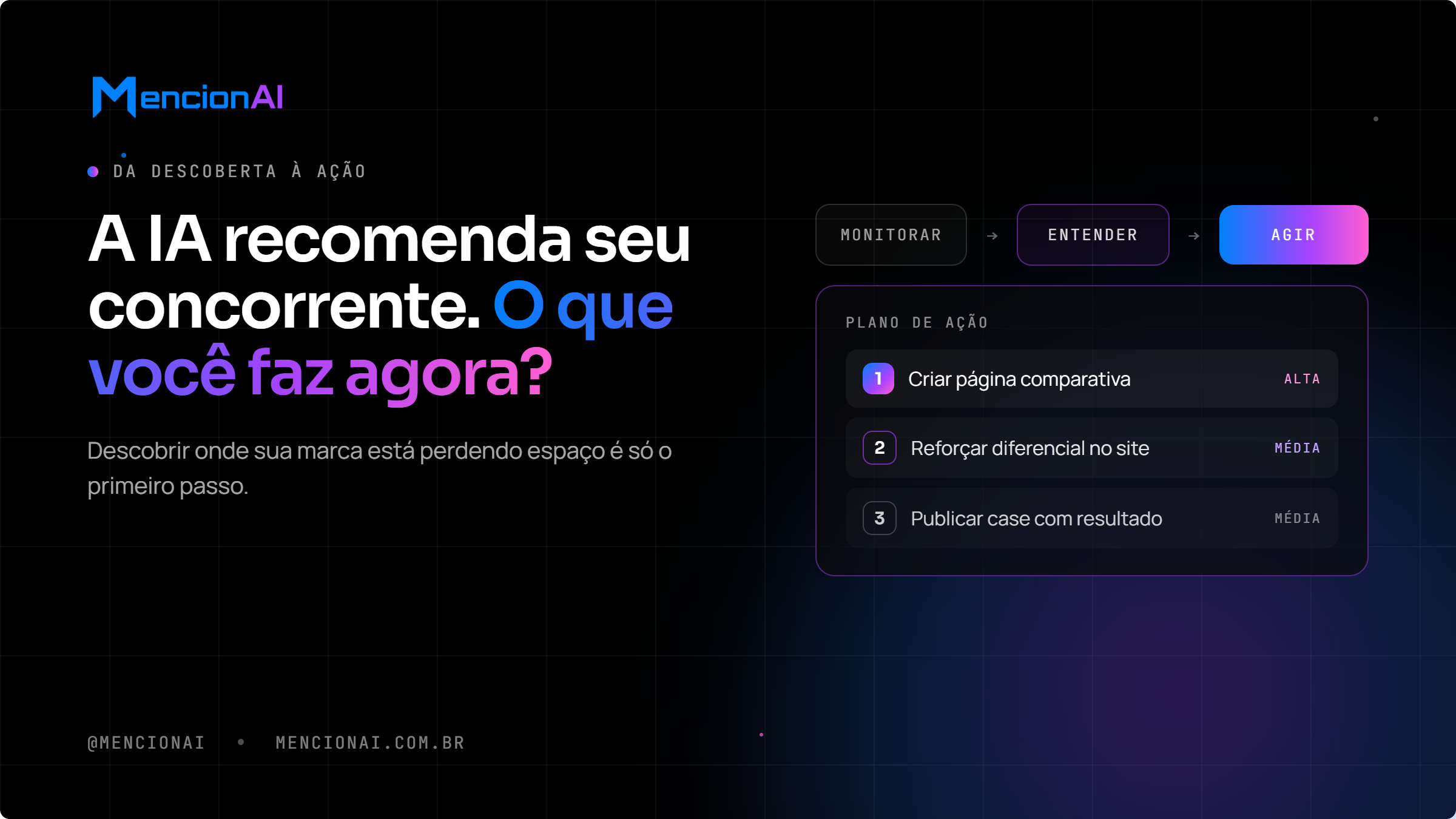
Within the Action Plan from MencionAI, this type of catalog adjustment is one of the possible actions when monitoring shows that a competitor frequently appears in a product prompt while the brand does not.
Frequently Asked Questions
Does structured data guarantee my product will appear on ChatGPT? No. Structured data helps compatible mechanisms interpret the sheet more accurately, but presence in a response depends on other factors, such as competition for the same prompt and the sources the model uses.
What matters more, sales text or technical sheet? For AI to understand the product, a complete technical sheet (dimensions, material, compatibility, use case) weighs more than sales text. Sales text still plays its role for those who have reached the page, but it does not help the model decide if the product answers the prompt.
Do I need to use the Product type from schema.org in all sheets? It’s a good practice for any product page you want to be considered by AI and search engines. Name, category, attributes, price, and availability are the fields that most often appear in this type.
Does this replace AI Visibility monitoring? No. Organizing the catalog improves the chance of AI understanding the product, but only monitoring shows whether this has actually changed the brand's presence in responses, prompt by prompt.
FAQ
What is E-E-A-T and how does it help AI citations?
Google Search Central describes E-E-A-T as experience, expertise, authoritativeness, and trustworthiness — trust first. Named authors, first-hand experience, and citations to official docs help people judge who stands behind the page. Structured data is not required for AI Overviews, but Article, Person, and Organization markup still help Search understand the author and publisher.
How should product catalogs be marked up so AI systems can cite them?
Use Google Product structured data and schema.org Product on the live offer page, with price, availability, and consumer-facing facts that match Lei 8.078 (CDC).
What is GEO?
Generative Engine Optimization is how MencionAI gets a brand cited in AI answers.